Release risk
Changes made directly in production can introduce regressions and cause downtime.

 Website reviewed · Platform9
A technical review covering release controls, technical SEO and conversion design.
Explore the approachChanges made directly in production can introduce regressions and cause downtime.
Sitemap, canonical and indexation issues can make it harder for search engines to discover priority pages.
Heavy assets, unstable layouts and inconsistent calls to action can make it harder for visitors to take the next step.
Separate initial code and compatibility checks from staging performance tests, cross-browser checks and user acceptance testing. Release validated changes to production on a scheduled cadence.
Review Search Console findings, robots rules, sitemaps, canonicals and obsolete URLs. Align indexation signals with intended pages and apply structured data that reflects visible content.
Optimise images, script delivery, lazy loading and caching. Clarify information hierarchy, trust signals and calls to action. Confirm the relevant enquiry or demo event before measuring conversion performance.
Google PageSpeed Insights tested the Platform9 homepage on 9 November 2026. The report combines real-user field data with a simulated Lighthouse lab test.
Desktop Chrome UX Report, 10 October–6 November 2026. Metrics are reported at the 75th percentile.
The desktop origin-wide assessment failed, with a CLS of 0.14.
Blocking time and layout shifts are two areas to investigate in the lab results.
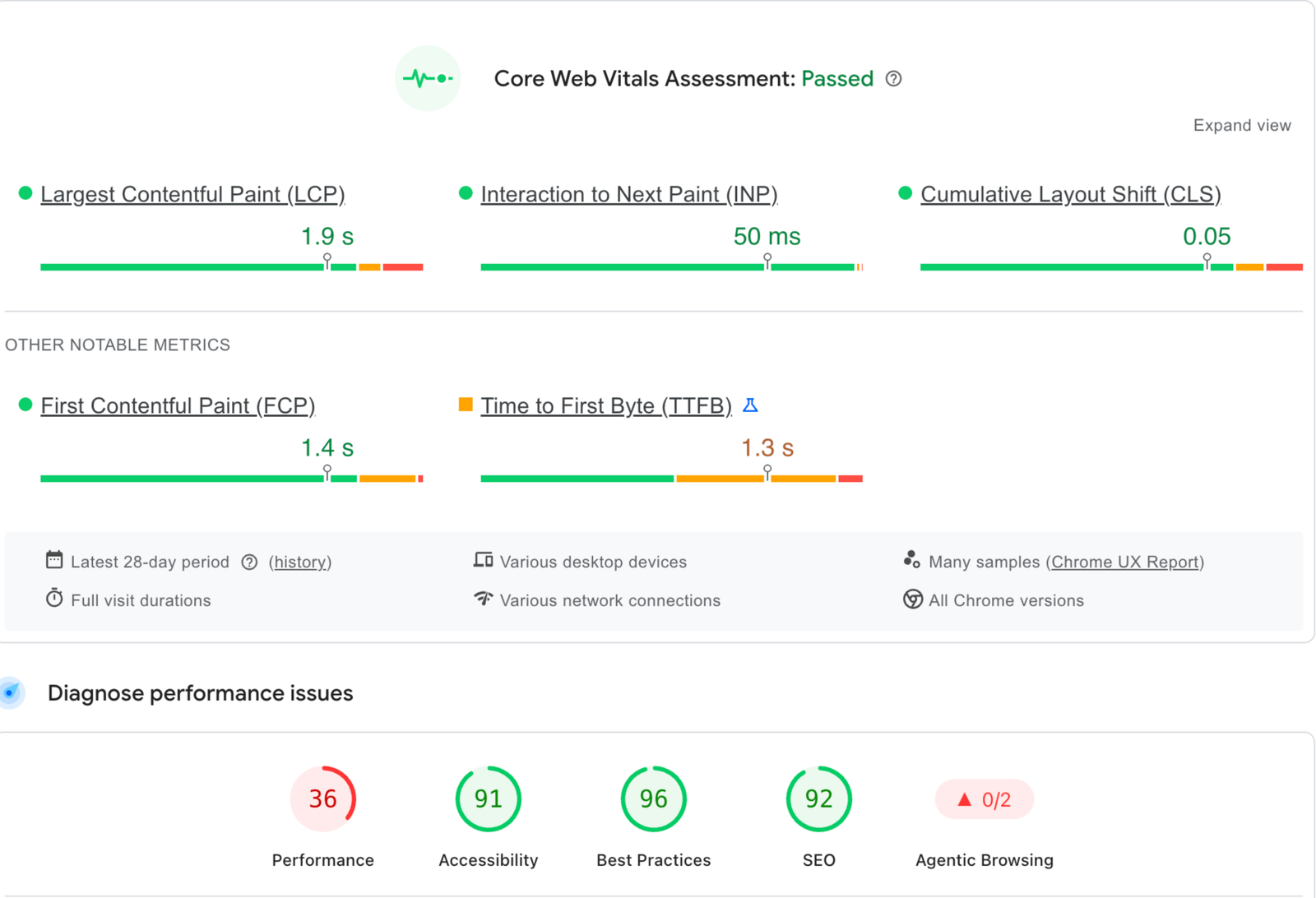
This report provides a point-in-time measurement. Project attribution and any change from a pre-project baseline remain to be confirmed.
View the desktop PageSpeed reportStart with the release, search or enquiry challenge that matters most to your business.